For the background and theory behind situational leadership click here.
Situational Leadership in practice:
In 2023 I was working in my first role within CI and had one direct report within my charge. It was part of my job to help Jodie develop in to a position where she could eventually take over my role as CI manager.
It was 11am and my boss, the site director, came to ask whether I could host a factory tour for the regional IT director who was due to arrive on site in 1 hours time.
I had an important meeting starting at 11:30 so wasn’t available to be the host so I asked Jodie if she wouldn’t mind doing it instead. She looked at me wide-eyed and said that she’d never hosted a factory tour before and was worried she’d get it wrong. In this case, she pretty much skipped development stage D1 (High confidence, Low competence) and went straight to development stage D2 (Low confidence, Low competence).
Don’t ignore concerns:
This situation is pivotal and can really help or hinder trust and thus your working relationship if not handled correctly.
Because I was asking Jodie to carry out a task that she hadn’t done before and with very little time to prepare, I needed to show her that she had my fully support ahead of performing the task.
This situation and the task were key development opportunities for her and I really wanted it to go well because it would grow her self-confidence.
I told her that I had 30 minutes until my next meeting and would spend every minute helping her to prepare for the visit.
Development stages:
Each time a task is performed, a person will be in 1 of 4 development stages. It is important to know what stage your direct report is in so that you can tailor your leadership style to that.
Because Jodie had no experience in the task and was more fearful than excited about the prospect of doing it, she was in development stage 2 (Low confidence, Low competence).
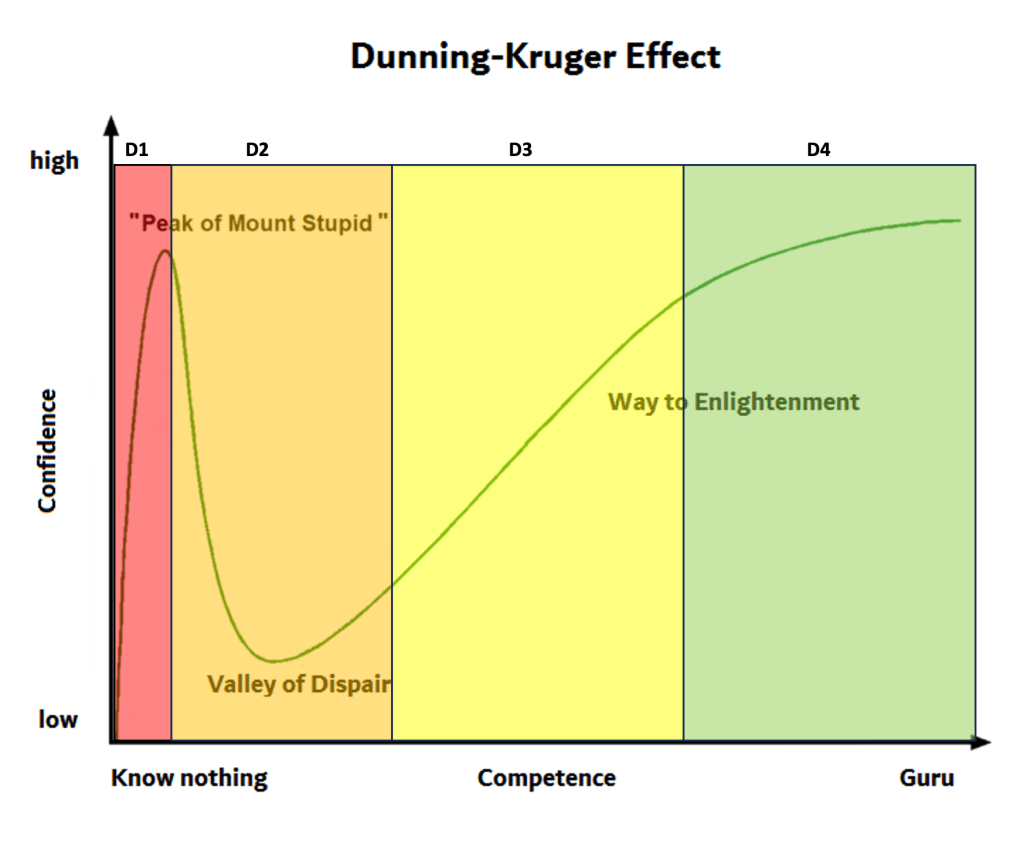
Now that I knew what development stage she was in for this task, I could tailor what I did next to help her progress at least to D3 before she hosted the VIP.
In stage D2, the corresponding leadership style (S2) is high support and high direction with entails giving specific actions (direction) and boosting confidence (support).
I went through each of her concerns one by one and broke each down for her to illustrate that she already had all of the information she needed to complete the task and do it well. At this point she just needed help to organise her thoughts which would reduce overwhelm and move her from panic in to action.
When faced with this situation I have seen managers default to acting as though their direct report is in D4 (High confidence, High competence) and just tell them to get on with it.
Personally I don’t believe in that sink or swim style because I feel that people succeed in spite of and not because of it. This leads some to believe that this method helps to “weed out” those who wouldn’t be good enough anyway but by doing so, you are rejecting a huge percentage of people who would have been excellent at a task and who are highly coachable which drastically reduces your talent pool.
Moving from D2 to D3:
Step 1: Explain the purpose of the visit
Context is important and helps put all other things in to perspective. Here I explained to her what the VIP was here to do (Gain a basic understanding of the process, what technology we used, the common issues we experienced as a site and what we would need in order to have better results).
Step 2: Ask about their concerns and go through each in turn
Concern 1: “I have no idea what route to take“
My question: What route would seem the most obvious to you?
Her answer: To follow the process through from start to end
Concern 2: “I haven’t done this before and I am afraid I might look stupid in front of our visitor“
My proposal: Manage his expectations and tell him how you feel and about your level of experience when you first meet. Being humble in this way breaks the ice, helps him will understand your level of experience and makes you feel more relaxed in the process because you aren’t worrying about pretending to be highly competent for the sake of appearances.
Concern 3: “I don’t have intimate knowledge of our systems and the issues we face”
My question: Do you know anyone who does?
Her answer: The shift supervisors do, so I could be there to make introductions and tell the visitor to direct any questions he has about the area to them.
Concern 4: “I don’t know what size PPE to get or where to get it from”
My response: I will get the sizes for you
Concern 5: “I don’t know where to get all of the PPE required”
My question: Do you know someone who does?
Her answer: Yes! I can give the sizes to Andy and he can get that for me
Step 3: Ask how they feel about the task now
Following the interaction above (this took about 10 minutes in total) I asked Jodie how she now felt about carrying out the task. She said she felt confident in everything that needed doing. Boom! Now she was in stage D3!
In the end….
Jodie came back in to the office after the visit BEAMING! She was so pleased with herself for completing the visit and she was given great feedback from the visitor. Mission accomplished as far as I can tell!
In the end all it took was a little support and direction to be given for her to have a bigger chance of success.
Motivation comes from trying something and seeing results and that’s exactly what happened that day. Jodie was put at the edge of her comfort zone and had a great experience which gave her more confidence in herself and made her more motivated to take on new, harder tasks in the future.
The sink or swim approach for new tasks doesn’t work, and even though some people may manage to swim to safety, you have also given them a lifelong fear of the water.
When you next delegate a task to your direct report, watch for their reactions, ask questions to try and understand what development stage they are at and adapt your leadership style to what they most need at that time and you will help them grow and develop like never before.
 Alex Devereux